
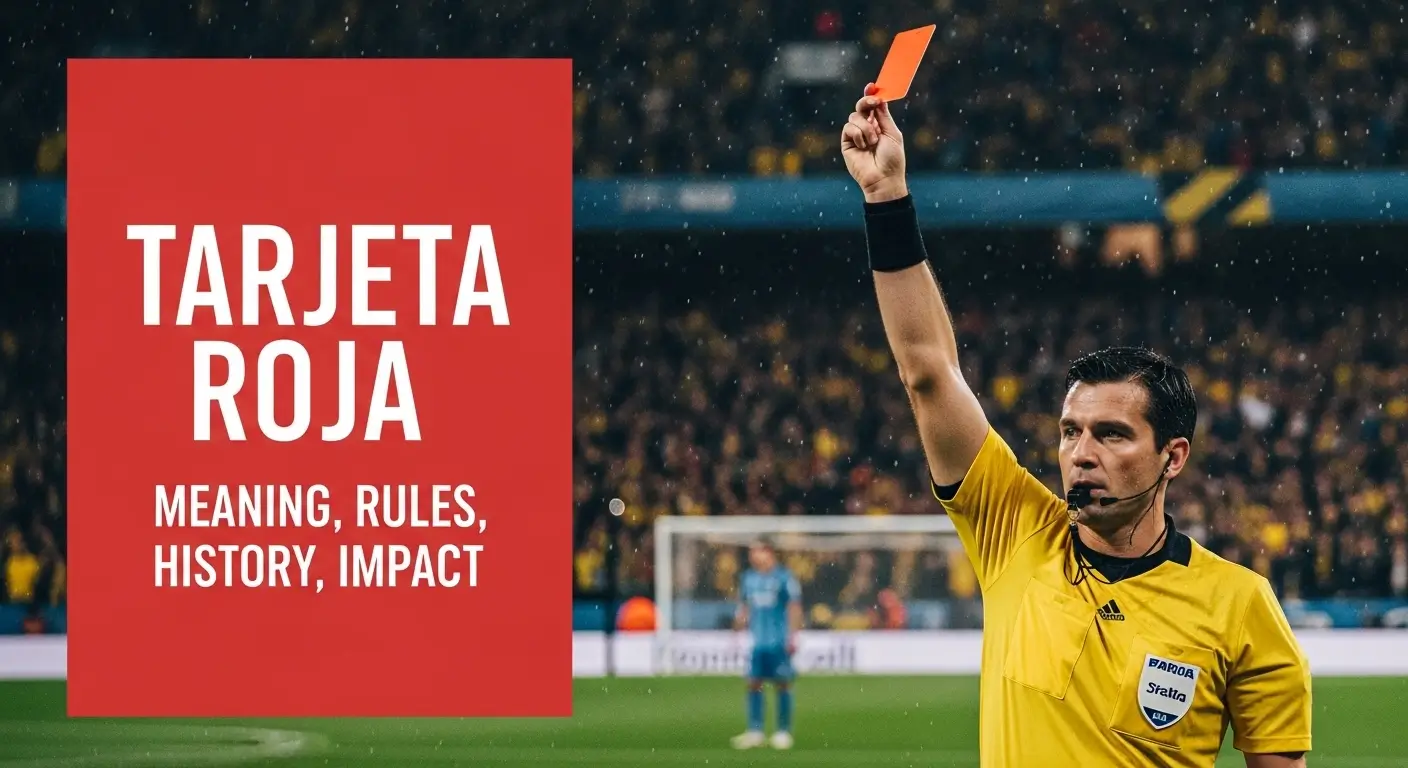
In the world of football, few moments create as much drama as a tarjeta roja. When a referee pulls a red card from their pocket and holds it high in the air, everything changes. The crowd reacts instantly. Players argue or accept their fate. Coaches rethink strategy. A single decision can completely shift the direction of a match.
The tarjeta roja is more than just a card. It represents discipline, authority, and the enforcement of fair play. In this detailed guide, we will explore what a tarjeta roja means, when it is given, its history, its impact on matches, famous examples, and how it affects players and teams.
What Is a Tarjeta Roja?
A tarjeta roja (red card) is a penalty issued by the referee in football when a player commits a serious offense. Once a player receives a tarjeta roja:
- They must immediately leave the field.
- They cannot be replaced by another player.
- Their team continues the match with one fewer player.
This often puts the team at a significant disadvantage.
The Origin of the Tarjeta Roja
How Red Cards Began
The red and yellow card system was introduced during the 1970 FIFA World Cup. Before that, referees verbally warned or dismissed players, which sometimes caused confusion due to language differences.
The color system was inspired by traffic lights:
- Yellow means warning.
- Red means stop.
This simple system quickly became universal and remains one of the most recognizable rules in sports.
When Is a Tarjeta Roja Given?
A tarjeta roja is issued for serious rule violations. According to football regulations, a player can receive a red card for:
1. Serious Foul Play
Dangerous tackles or actions that risk injuring another player.
2. Violent Conduct
Hitting, kicking, or behaving aggressively toward opponents or officials.
3. Spitting at Someone
This is considered extremely disrespectful and results in immediate dismissal.
4. Denying a Clear Goal-Scoring Opportunity
If a player intentionally stops a goal chance using illegal means (like handball), a tarjeta roja can be given.
5. Offensive or Abusive Language
Insulting the referee or other players.
6. Two Yellow Cards
If a player receives two yellow cards in the same match, it automatically results in a tarjeta roja.
The Difference Between Yellow and Tarjeta Roja
Understanding the difference is important.
| Yellow Card | Tarjeta Roja |
|---|---|
| Warning | Immediate dismissal |
| Player stays on field | Player must leave |
| Less serious offense | Serious offense |
| Can lead to suspension if accumulated | Automatic suspension |
The tarjeta roja is much more severe and often has long-term consequences.
Impact of a Tarjeta Roja on a Match
A red card can completely change a game’s outcome.
Playing with 10 Players
When a team loses one player:
- Defensive pressure increases.
- Attacking options decrease.
- Fatigue becomes a major issue.
Statistics from major tournaments show that teams reduced to 10 players are significantly less likely to win.
Tactical Changes
Coaches must quickly adjust their strategy. Common changes include:
- Switching to defensive formation.
- Removing a forward player.
- Focusing on counterattacks.
A tarjeta roja forces immediate adaptation.
Psychological Effect of a Tarjeta Roja
The mental impact is just as important as the physical one.
On the Player
The dismissed player often feels:
- Frustration
- Guilt
- Disappointment
A red card can damage confidence, especially if it affects the team’s result.
On the Team
Teammates may:
- Feel motivated to fight harder.
- Feel stressed due to extra pressure.
Momentum can shift instantly after a tarjeta roja.
Famous Tarjeta Roja Moments in Football History
Throughout football history, there have been unforgettable red card moments.
Zinedine Zidane – 2006 World Cup Final
One of the most famous tarjeta roja incidents happened in the 2006 World Cup final when Zinedine Zidane was sent off for headbutting Marco Materazzi. It was his final professional match and changed the tone of the final.
David Beckham – 1998 World Cup
David Beckham received a red card for kicking an opponent. England later lost the match, and Beckham faced heavy criticism.
These moments show how a tarjeta roja can impact careers and national pride.
Suspension After a Tarjeta Roja
A red card usually leads to suspension.
Standard Suspension
- One-match ban for basic red cards.
- Longer bans for violent conduct.
Accumulated Discipline
Repeated red cards can result in:
- Extended suspension
- Fines
- Damage to reputation
Professional leagues carefully track disciplinary records.
Tarjeta Roja in Different Competitions
While the basic rules remain similar, enforcement may vary slightly across competitions.
Domestic Leagues
Each league may:
- Set different suspension lengths.
- Review red cards after matches.
International Tournaments
In tournaments like the World Cup:
- Suspensions carry over to future matches.
- Appeals are sometimes allowed.
Consistency remains key to fairness.
Technology and the Tarjeta Roja
VAR (Video Assistant Referee)
Modern football uses technology to review serious incidents.
VAR helps referees:
- Confirm violent conduct.
- Check goal-scoring opportunities.
- Review mistaken identity.
This has reduced incorrect tarjeta roja decisions.
Fairness and Controversy
Despite technology, debates continue. Some fans argue:
- Referees are too strict.
- Decisions depend on interpretation.
The tarjeta roja remains one of the most debated elements of football.
Youth Football and Tarjeta Roja
Red cards are also used in youth football to teach discipline.
Coaches emphasize:
- Respect for opponents.
- Emotional control.
- Fair competition.
Early understanding of consequences helps young players develop professionalism.
How Players Avoid Receiving a Tarjeta Roja
Professional players train not only physically but mentally.
Key Strategies
- Stay calm under pressure.
- Avoid unnecessary arguments.
- Control aggressive reactions.
- Understand referee tendencies.
Discipline is a crucial skill in modern football.
Statistical Insights About Tarjeta Roja
Here are some interesting facts:
- On average, top European leagues see several red cards per season.
- Defensive players receive more red cards than attackers.
- Late-match red cards are more common due to fatigue and frustration.
These numbers highlight the competitive intensity of football.
Tarjeta Roja in Other Sports
While most famous in football, red cards appear in:
- Rugby
- Handball
- Field hockey
In each sport, a tarjeta roja represents serious misconduct and immediate removal.
Cultural Impact of the Tarjeta Roja
The red card has become a global symbol.
It is used metaphorically in everyday life to mean:
- “You’re out.”
- “Game over.”
- “Zero tolerance.”
Its meaning extends far beyond sports.
Controversial Tarjeta Roja Decisions
Some red cards have caused worldwide debate.
Fans often argue about:
- Intent vs accident.
- Strict rule enforcement.
- Referee consistency.
Controversy keeps the discussion alive in media and among supporters.
The Role of Referees in Issuing a Tarjeta Roja
Referees carry significant responsibility.
They must:
- Stay impartial.
- Assess situations quickly.
- Handle player reactions calmly.
A single tarjeta roja decision can influence millions of viewers and change tournament outcomes.
Fair Play and the Spirit of the Game
The tarjeta roja supports the core value of football: fair play.
It ensures:
- Player safety.
- Respect for rules.
- Competitive balance.
Without strong discipline, the game could become dangerous.
Can a Tarjeta Roja Be Reversed?
In some cases:
- Leagues review match footage.
- Appeals may reduce suspensions.
- Mistaken identity can be corrected.
However, once shown during a match, the player must leave immediately.
The Emotional Drama of a Tarjeta Roja
Few moments in football match the drama of a red card.
The crowd:
- Gasps.
- Cheers or boos.
- Feels tension rise.
Television replays intensify the moment. Social media discussions begin instantly. The tarjeta roja creates unforgettable scenes.
Conclusion
The tarjeta roja is one of the most powerful symbols in football. It represents authority, discipline, and the importance of fair competition. While controversial at times, it plays a crucial role in maintaining safety and order on the field.
From its origins in the 1970 World Cup to modern VAR reviews, the tarjeta roja has shaped countless matches and careers. It can change tactics, influence emotions, and alter tournament history in seconds.
Understanding the tarjeta roja helps fans appreciate the complexity of football. It reminds us that the game is not just about scoring goals but also about respect, control, and responsibility.
In football, a single moment can define everything — and often, that moment involves a tarjeta roja.