
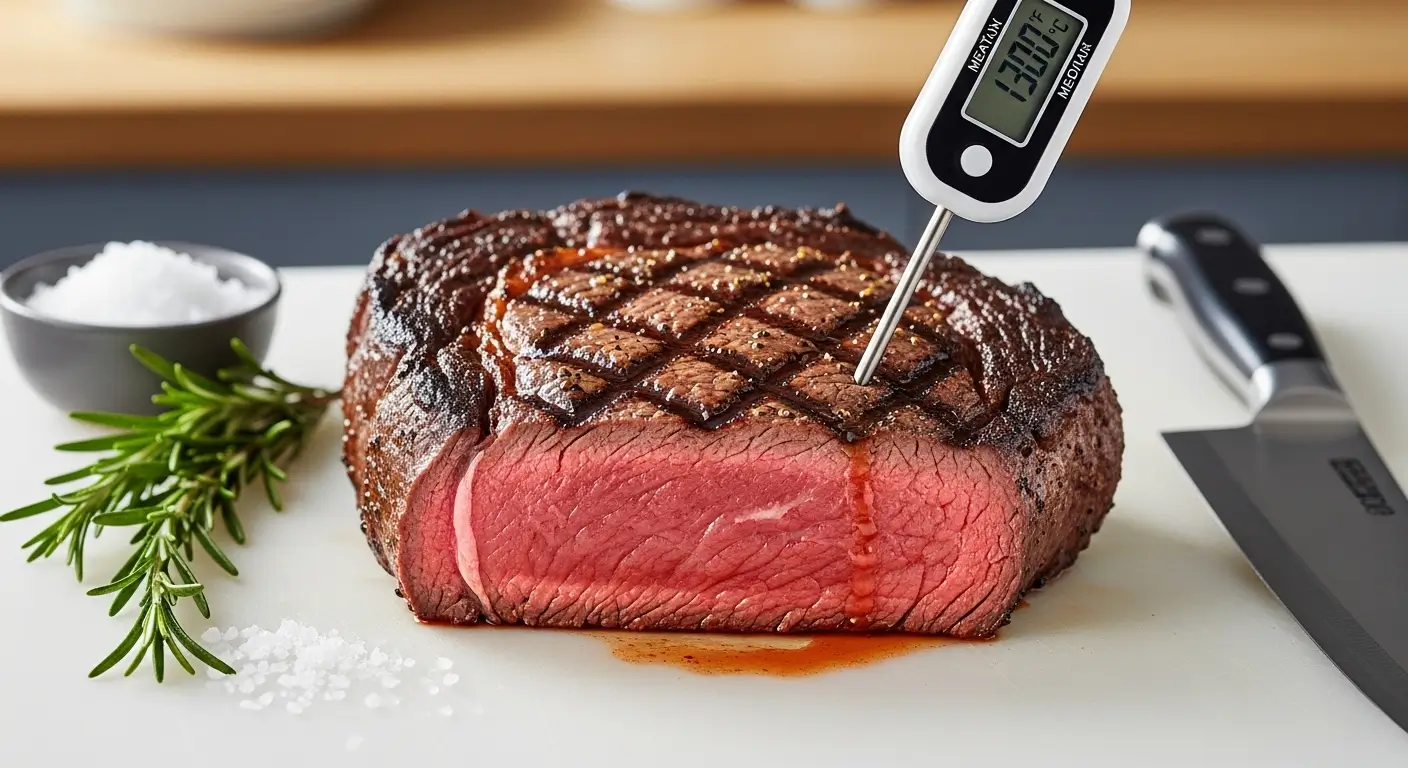
Cooking a steak to perfection is both an art and a science. Among all doneness levels, medium rare steak temp is widely considered the gold standard by chefs and steak lovers around the world. It offers the perfect balance of tenderness, juiciness, and rich flavor.
If you’ve ever wondered how to achieve that perfect pink center with a warm, juicy interior, this guide will walk you through everything you need to know. From the exact temperature to cooking methods, tips, and common mistakes, this article will help you master the perfect steak every time.
What Is Medium Rare Steak Temp?
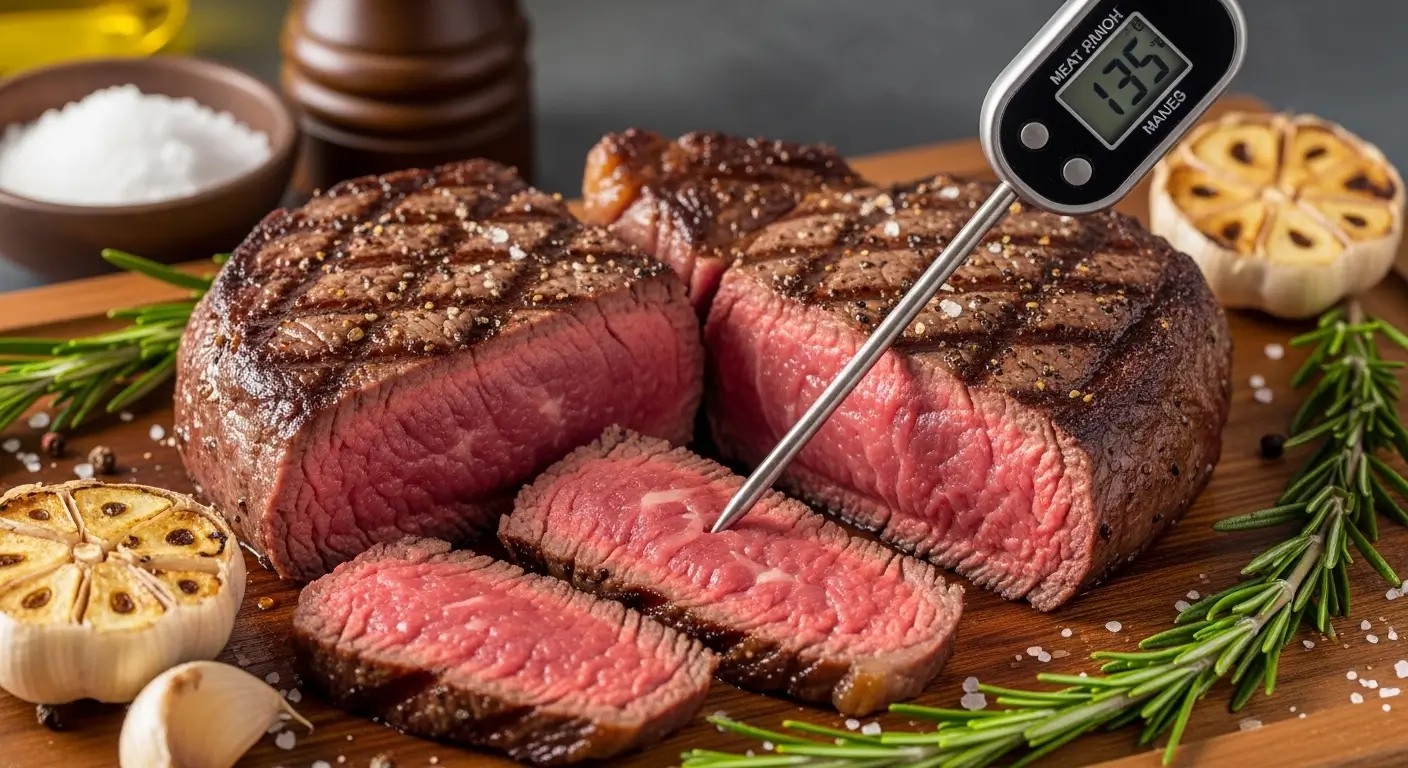
The term medium rare steak temp refers to the internal temperature of a steak when it is cooked to medium rare doneness.
Ideal Temperature Range
- 130°F to 135°F (54°C to 57°C)
At this temperature:
- The center is warm and red to pink
- The outside is nicely seared
- The texture is soft and juicy
This range is considered ideal because it preserves the natural flavors and tenderness of the meat.
Why Medium Rare Steak Is So Popular
Perfect Balance of Texture and Flavor
Medium rare steak provides:
- A juicy interior
- A tender bite
- A flavorful crust
Cooking beyond this point can cause the meat to lose moisture, making it tougher and less flavorful.
Preferred by Chefs
Most professional chefs recommend medium rare because:
- It highlights the natural quality of the meat
- It avoids overcooking
- It maintains the steak’s structure and juices
Understanding Steak Doneness Levels
To fully understand medium rare steak temp, it helps to compare it with other doneness levels.
Steak Temperature Guide
- Rare: 120–125°F (cool red center)
- Medium Rare: 130–135°F (warm red center)
- Medium: 140–145°F (warm pink center)
- Medium Well: 150–155°F (slightly pink)
- Well Done: 160°F+ (no pink)
Among these, medium rare is often seen as the best balance between raw and fully cooked.
How to Measure Medium Rare Steak Temp
Use a Meat Thermometer
The most accurate way to check medium rare steak temp is by using a digital meat thermometer.
Steps:
- Insert the thermometer into the thickest part of the steak
- Avoid touching bone or fat
- Check the temperature before removing from heat
Carryover Cooking
After removing the steak from heat, the temperature continues to rise by about 5°F (2–3°C).
So, it’s best to:
- Remove steak at 125–130°F
- Let it rest until it reaches 130–135°F
Best Cuts for Medium Rare Steak
Not all cuts of beef are equal. Some cuts are better suited for medium rare cooking.
Top Steak Cuts
- Ribeye
- Sirloin
- Filet mignon
- New York strip
- T-bone
These cuts have good marbling, which helps retain flavor and moisture at medium rare steak temp.
How to Cook the Perfect Medium Rare Steak
1. Prepare the Steak
Before cooking:
- Let the steak sit at room temperature for 20–30 minutes
- Pat it dry with paper towels
- Season with salt and pepper
2. Choose Your Cooking Method
There are several ways to achieve the perfect medium rare steak temp.
Pan-Searing Method
One of the most popular methods.
Steps:
- Heat a pan until very hot
- Add oil with a high smoke point
- Sear steak for 2–3 minutes per side
- Flip and cook until desired temperature
Grilling Method
Great for outdoor cooking.
Steps:
- Preheat grill to high heat
- Cook steak for 4–5 minutes per side
- Check internal temperature
Oven + Sear Method
Perfect for thicker cuts.
Steps:
- Sear steak in a hot pan
- Transfer to oven (around 400°F / 200°C)
- Cook until medium rare steak temp is reached
The Importance of Resting the Steak
After cooking, always let your steak rest.
Why Resting Matters
- Allows juices to redistribute
- Prevents dryness
- Enhances flavor
Resting Time
- Let the steak rest for 5–10 minutes
Skipping this step can result in juice loss when cutting the steak.
Common Mistakes to Avoid
Even experienced cooks can make mistakes when aiming for the perfect medium rare steak temp.
1. Overcooking the Steak
Cooking beyond 135°F can lead to:
- Dry texture
- Loss of flavor
2. Not Using a Thermometer
Guessing can lead to inconsistent results. Always use a thermometer for accuracy.
3. Cooking Cold Steak
Cooking straight from the fridge can cause uneven cooking.
4. Skipping Rest Time
Cutting too early releases juices, making the steak less juicy.
Tips for Perfect Medium Rare Steak
Use High Heat
A hot cooking surface ensures:
- A good crust
- Even cooking
Season Properly
Simple seasoning works best:
- Salt enhances flavor
- Pepper adds mild spice
Flip Only Once or Twice
Too much flipping can prevent proper searing.
Use Butter for Extra Flavor
Adding butter during cooking can:
- Enhance taste
- Improve texture
Medium Rare Steak Temp and Food Safety
Is Medium Rare Safe?
Yes, for whole cuts of beef, medium rare is generally safe when cooked properly.
Why?
- Bacteria usually live on the surface
- High heat kills surface bacteria
However:
- Always use fresh, high-quality meat
- Avoid undercooking ground beef
Restaurant vs Home Cooking
Why Restaurants Get It Right
Restaurants often achieve perfect medium rare steak temp because they:
- Use high-quality equipment
- Have experienced chefs
- Monitor temperature carefully
Can You Do It at Home?
Absolutely! With the right tools and practice, you can achieve restaurant-quality steak at home.
How Thickness Affects Cooking Time
Thicker steaks take longer to reach medium rare steak temp.
General Guidelines
- 1-inch steak: 4–5 minutes per side
- 1.5-inch steak: 5–7 minutes per side
Always rely on temperature rather than time alone.
Tools That Help Achieve Perfect Results
Essential Tools
- Meat thermometer
- Cast iron pan or grill
- Tongs (not a fork)
- Timer
These tools make cooking easier and more accurate.
Flavor Enhancements
Optional Additions
- Garlic butter
- Fresh herbs (like rosemary or thyme)
- Marinades
These can enhance the taste without overpowering the natural flavor of the steak.
Why Medium Rare Steak Temp Is Considered Ideal
Medium rare steak temp is popular because it:
- Preserves natural juices
- Maintains tenderness
- Enhances flavor
Cooking beyond this point often reduces these qualities.
Final Thoughts
Mastering the medium rare steak temp is one of the most rewarding skills in cooking. It allows you to enjoy steak at its best—juicy, tender, and full of flavor.
By understanding temperature, using the right tools, and following proper techniques, you can consistently cook steak to perfection. Whether you are cooking for yourself, your family, or guests, achieving the perfect medium rare steak will always impress.